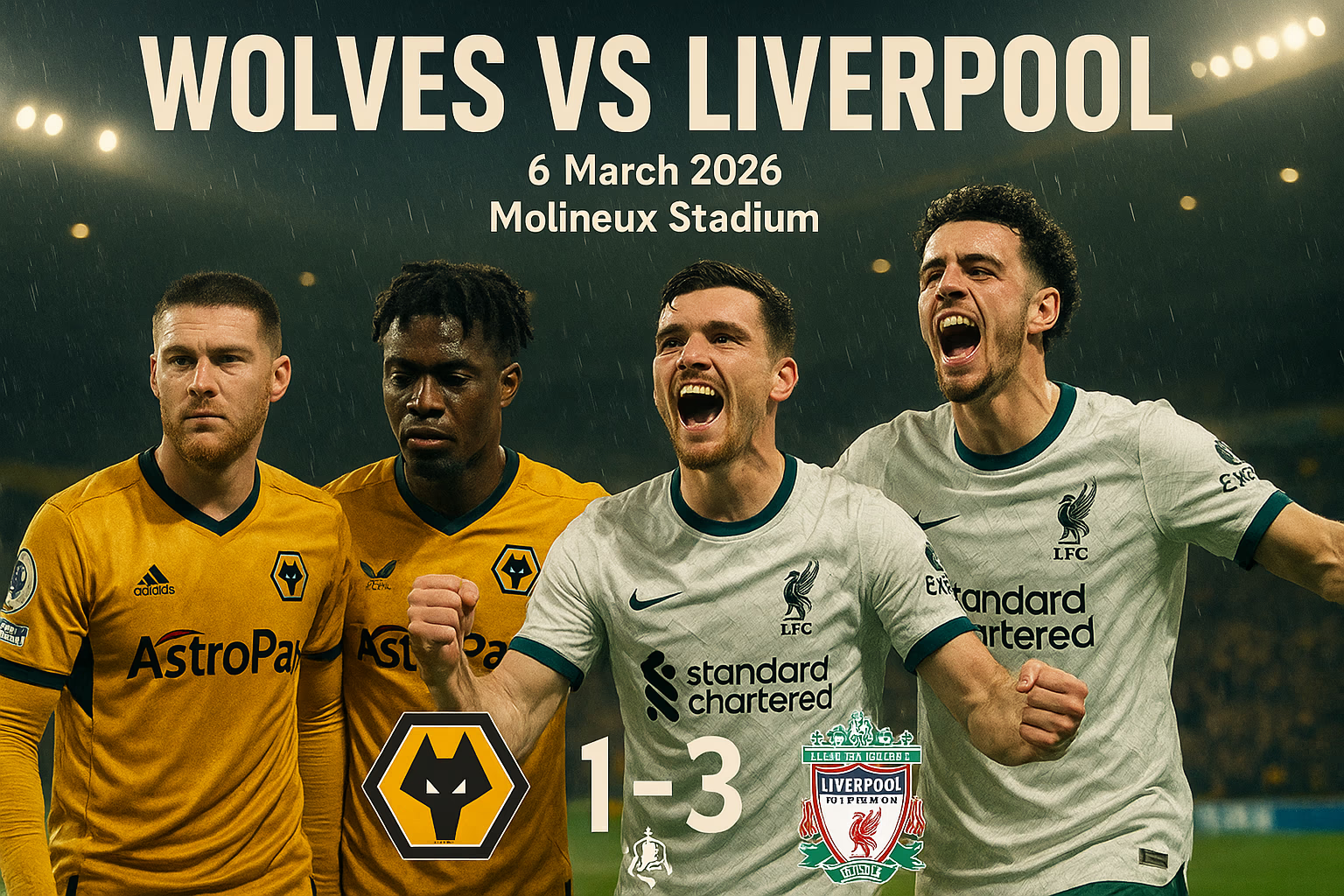



In 2019 Molineux revelled in Liverpool’s elimination. Seven years on, the same terrace folklore hung in the cold Friday air, yet Arne Slot’s Liverpool arrived with a different poise and dismantled Wolves 3-1 in this FA Cup Round of 16 tie to deny Rob Edwards his own cup upset.
Slot kept faith with a 4-2-3-1 that asked Ryan Gravenberch and Alexis Mac Allister to choreograph from deep, while Andrew Robertson and the precocious Rio Ngumoha stretched the touchline. Edwards countered with his 3-5-1-1, Tolu Arokodare the lone reference point and Sam Johnstone the safety net behind a back three that included the newly minted captain Toti Gomes. For 45 minutes Wolves bent without breaking, their compact shell narrowing the interior corridors and leaving Liverpool to recycle possession in patient arcs.
The question, then, was how long that resistance could hold once Robertson began to raid with intent. Just six minutes after the restart Curtis Jones guided the ball into the Scot’s stride and Robertson finished to puncture the evening. Barely had the stadium processed the blow before Robertson turned provider, moving inside to connect with Mohamed Salah, who converted the second. Wolves looked stunned, their midfield screen suddenly full of red jerseys and static passing lanes.
Jones was the game’s fulcrum. He drifted into the half spaces, linked with Mac Allister and demanded the ball in areas that forced Wolves to twist out of shape. When Gravenberch supplied him in the 74th minute, Jones kept his composure and added Liverpool’s third, the sort of finish that underlines why Slot trusts him as the platform for this evolving side. Could Edwards have found an answer to the fluidity that Jones, Salah and Ngumoha produced before the interval closed? Perhaps only if his team had found an outlet to relieve the pressure.
Wolves were starved of those outlets. Angel Gomes floated between the lines without ever catching a foothold and Arokodare, isolated for long spells, clung gamely to hopeful clearances. Johnstone kept the tie respectful with six saves and even delivered the late consolation, launching a stoppage-time ball that Hwang Hee-Chan chased and tucked away. It sparked celebration from the South Bank but felt like a nod to what might have been had Wolves carried more threat before the damage was done. Santiago Bueno’s early booking spoke to Liverpool’s tempo; Dominik Szoboszlai’s yellow signalled the one moment the visitors dallied.
Ngumoha deserved mention too. Before making way for Florian Wirtz he rattled down the flank, won duels, and showed why Liverpool’s academy rhetoric about pathway and opportunity is not just posturing. Robertson, meanwhile, dictated the rhythm with 103 passes and four key contributions in the final third, a reminder that his own evolution under Slot is central to this team’s shape. In the broader context, this looked like a side beginning to understand Slot’s orthodoxy: control the ball, suffocate space, punish lapses.
Statistics Liverpool produced 20 shots to Wolves’ 4, registered 67 percent possession, and forced 11 corners while the hosts earned none. Jones matched his goal with an assist, Robertson mirrored that haul, and Johnstone added his own assist to those six saves.
Liverpool march on to the quarter-finals with a sense of inevitability, knowing sterner assignments await but buoyed by the fluency of their second half here. Attention soon shifts back to the league, where Manchester City’s response looms large and is mapped out in our preview of their meeting with Newcastle here. Wolves are left to chase consistency in the Premier League, their FA Cup dream gone but the evidence of their resilience intact if Edwards can harness it before spring tightens the campaign.