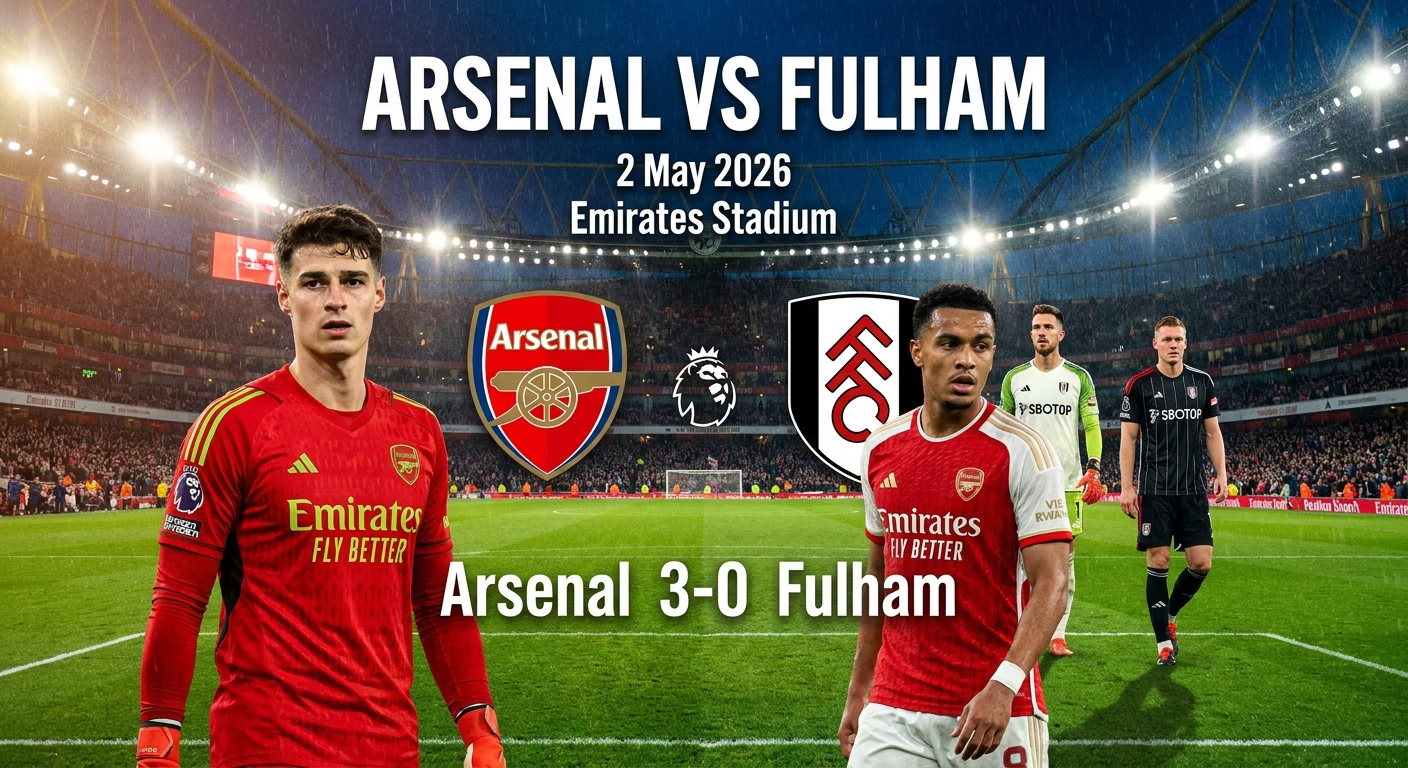



The fixture has become Arsenal’s private ritual. Thirty-three home meetings with Fulham now without defeat, and on Saturday evening at the Emirates the old pattern reasserted itself with an almost serene certainty as Mikel Arteta’s 4-2-3-1 kept Marco Silva’s mirror shape at arm’s length. The stakes were hardly trivial. Arsenal began the weekend top of the Premier League with Manchester City lurking two matches behind. What this suggested, even before a ball was kicked, was a need for authority rather than drama.
Authority arrived early. Viktor Gyökeres justified Arteta’s faith by scoring in the 9th minute, a simple finish after Bukayo Saka had located him inside the area. Could Fulham's defenders really claim surprise at that combination when it has been telegraphed all season? The question, then, was whether Silva’s side possessed the elasticity to bend without snapping.
The answer came, in part, on 23 minutes when Saša Lukić went into the book for a trip that betrayed Fulham’s frustration at living off scraps. Arsenal even flirted with a second before the interval when Riccardo Calafiori thought he had stretched the lead in the 29th minute only for VAR to judge him offside. That reminder of technology’s cold intervention barely altered the tempo. Arteta’s team kept probing with the patience of a chess grandmaster, Declan Rice and 19-year-old Myles Lewis-Skelly recycling possession while Leandro Trossard darted into half-spaces.
The decisive flurry arrived before the break. Saka, incandescent in that inside-right channel, strung together a neat interchange with Gyökeres and scored in the 40th minute. Fulham were still recalibrating when Trossard drifted into a central pocket and supplied Gyökeres in the 45th minute for the third. No flourish was necessary in the description: it was a goal born of timing and geometry. Arsenal led 3-0, Fulham looked shell-shocked, and the contest was effectively sealed.
Arteta withdrew Saka at half-time, introducing Noni Madueke in the 46th minute as the match shifted into energy-conservation mode. In the 63rd and 64th minutes Silva turned to Tom Cairney, Oscar Bobb, and Josh King, yet Arsenal’s structure endured. William Saliba and Gabriel Magalhães marshalled the central corridor, while Lewis-Skelly continued to meet Fulham’s runners with a maturity that should give England’s selectors pause.
Why, for all their substitutions, did Fulham muster only 0.43 expected goals and a single shot on target? Silva’s double pivot never solved the overloads Arsenal created down the left. Trossard, who ended with six successful dribbles, was the fulcrum. His assist was reward for an evening of constant movement that kept Timothy Castagne guessing. Rice’s withdrawal in the 64th minute for Martín Zubimendi did not disrupt rhythm either, which speaks to the depth Arteta has curated. Even the late introduction of academy midfielder Max Dowman in the 78th minute felt like a statement about the club’s confidence in its production line.
In the broader context, this result extends Arsenal’s lead at the summit to six points, though City’s two games in hand keep the margin delicate. Fulham remain ensconced in mid-table, insulated from relegation worry yet unable to crack the division’s elite. Their away record now reads four wins from eighteen, an awkward footnote for a club that aspires to the European conversation. Readers seeking precedents for underdogs tilting at hierarchy might look to Nantes vs Marseille, yet Silva’s men offered precious little rebellion here.
Key statistics:
- Arsenal 3-0 Fulham
- Shots on target: 9 to 1
- Expected goals: 2.97 to 0.43
- Possession: 54 percent to 46 percent
- Arsenal offsides: 7, including Calafiori’s disallowed goal
That is not to say the title race is decided. Arsenal travel to grounds where nerves can fray, and those two City fixtures in reserve hang over the run-in like an unspoken threat. Yet Arteta’s players head into the final fortnight with momentum and with Gyökeres bedding in as the No 9 they craved. Fulham, meanwhile, must sift through the debris before hosting opponents with far less to lose. Who adapts quicker will write the next chapter.